

More
U.S. WOMEN'S OPEN
Reason to Believe: U.S. Women’s Open Debuts in L.A. at Time Filled With Meaning, Ongoing Recovery

Reason to Believe: U.S. Women’s Open Debuts in L.A. at Time Filled With Meaning, Ongoing Recovery
This content was first published in Golf Journal, a quarterly print and monthly digital publication exclusively for USGA Members. To be among the first to receive Golf Journal and to learn how you can help make golf more open for all, become a USGA Member today.
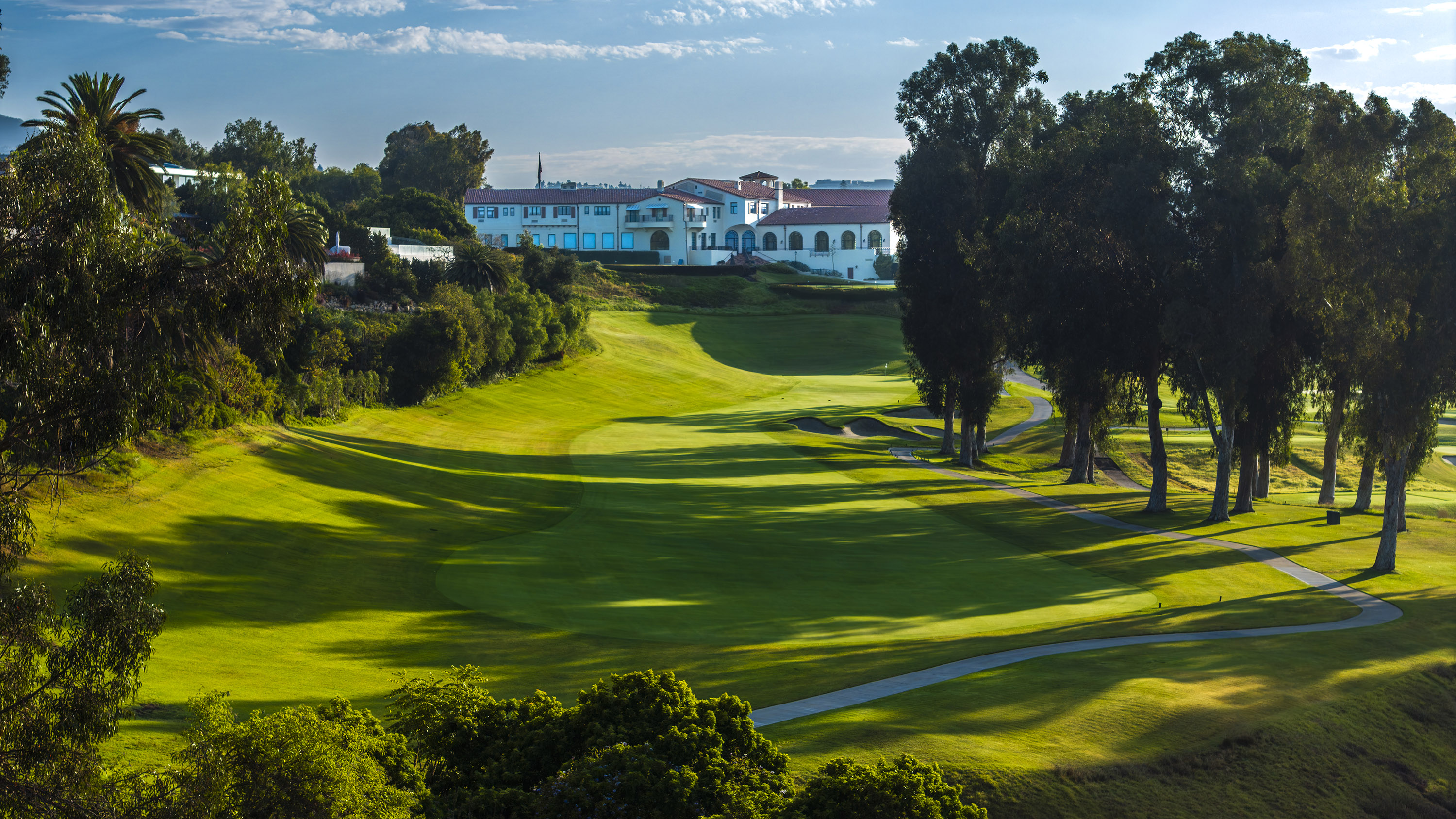
The Riviera Country Club sits on the periphery of Los Angeles and yet feels as if it doesn't belong to any city at all.
Step onto the canyon floor and the skyline vanishes behind eucalyptus trees and steep slopes. The noise of the Westside fades. Pacific breezes drift through the corridor of trees. In the late afternoon, when shadows stretch across the fairways, the place feels less like an LA landmark than a pocket preserved in time, an amphitheater built for golf.
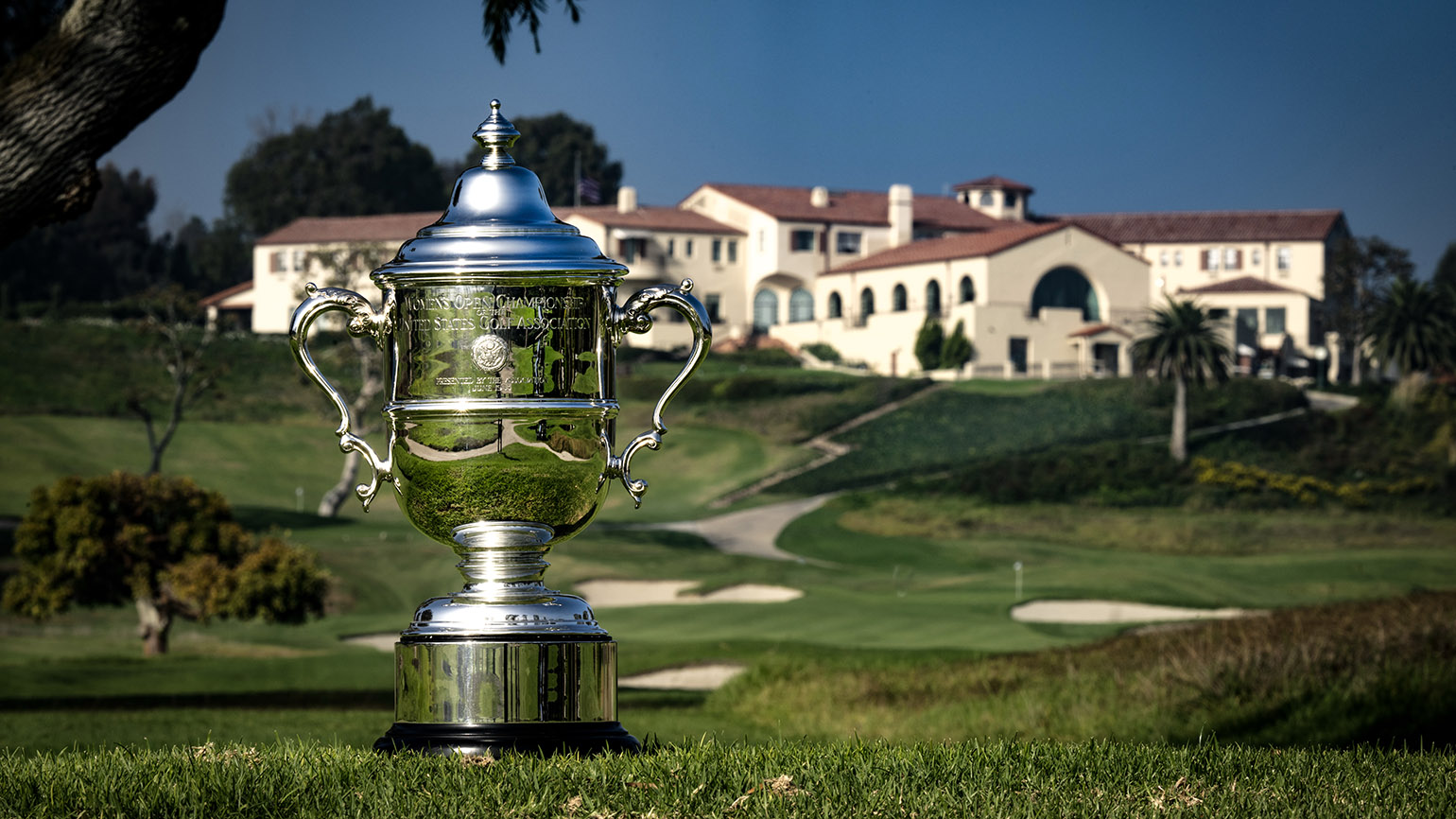
That’s why the 81st U.S. Women’s Open Presented by Ally at Riviera feels strangely inevitable, even if this is all new to the venerable venue.
From June 4-7, Riviera will host the U.S. Women’s Open for the first time, bringing the best players in the game to a venue synonymous with championship test, tradition and shotmaking. The timing is ideal in one sense: Riviera celebrates its centennial this year, having opened in 1926.
The timing is complicated in another sense. The championship arrives in Pacific Palisades as the community is still recovering from devastating wildfires in January 2025. Rebuilding does not end when a champion lifts a trophy. Riviera was spared. Much of what surrounds it was not.
The event unfolds at the intersection of those realities. It is, yes, the first Women’s Open at a timeless course. It is also a communal marker in the wake of catastrophe. The week will be about golf at its highest level, but also about what big events can mean to a ravaged place. It gives people a reason to return, to gather, to see familiar faces and feel the shape of normal life again, even briefly.
Riviera’s appeal begins with its land. Architect George C. Thomas Jr. laid the course into a canyon carved by an ancient riverbed that once ran from the Santa Monica Mountains to the Pacific. The terrain slopes subtly toward the sea, and that gentle pull shapes everything, from where approach shots land to how putts drift when your eyes insist they shouldn’t.
It’s a theater, too. The course sits low, the hillsides high. The edges of the property feel like balcony seating. Players often describe Riviera as a stage because it can feel like you’re being watched even when you’re alone.

Riviera’s general manager, Jim Richerson, believes that’s part of why the course has endured and why it’s ready for this prestigious championship.
“There is something very nostalgic about the facility,” Richerson says. “The golf course has never really had any major renovations or changes. The clubhouse is the exact same footprint today as it was when it was built in the 1920s.”
There’s a modern reality to the club, with updated systems and contemporary expectations, but the architecture does still read like a classic.
“The look and feel,” Richerson says, has “somewhat of a living, breathing, almost museum-like quality… but we also try to make sure that we’re able to service the needs of the modern era.”
That balance between historic bones and living energy makes Riviera unusually telegenic. The sight lines are familiar to anyone who has watched the PGA Tour’s Genesis Invitational, which returned in February following a one-year hiatus to Torrey Pines when the community was still reeling from the fires. The holes have distinct personalities. The finish carries built-in drama.
And that matters for the Women’s Open, an event that now reaches far beyond traditional golf audiences.
The U.S. Women’s Open is not simply another stop on the calendar. It is the oldest of the five women’s majors and has long served as the competitive standard for women’s golf.
Established in 1946, the U.S. Women’s Open was initially conducted by the fledgling Women’s PGA. When the LPGA Tour was founded in 1950, the Women’s Open already held unquestioned major stature, and is the only event recognized continuously as a major since the tour’s founding. The USGA assumed ownership of the championship in 1953 and has conducted it ever since.

Over time, the championship has mushroomed in scale and reach, reflecting the globalization of the sport. Yet it retains a defining characteristic: It is open to professionals and elite amateurs through a direct qualifying process, and the championship has a reputation for revealing the player who can withstand the most pressure and the most demanding conditions.
That’s one reason Riviera feels like such a natural fit. A championship built on history arrives at a course built on history. A championship designed to identify the game’s most complete player arrives at a venue famous for the precision it demands.
NBC will televise the championship, and although Mike Tirico will not call the event, he understands what Riviera represents.
“It’s just appropriate that the crown jewel of the sport is contested at a place like Riviera,” Tirico says, “that for so many generations has come to define a great championship test of golf.
“You think about iconic holes,” he adds. “Riviera has them, from the par threes to 10 to 18… that claustrophobic left side of the 18th and everything falling off to the right. You close your eyes and you can think of big moments and big shots at Riv.”
That’s what the Women’s Open is poised to deliver – new moments that will mingle with the revered ones.
The test will be demanding. Riviera’s kikuyu grass can sit the ball up or bury it, grabbing the clubface and forcing site-specific, vexing decisions about trajectory and spin. The greens can be equally perplexing. The canyon itself has a subtle gravitational pull toward the ocean, creating breaks that players sometimes sense more than they see.
Rick Sessinghaus, the Los Angeles-raised coach who works with two-time major champion Collin Morikawa, believes the setting could showcase the artistry of the women’s game.
“We have the Genesis,” he says. “A lot of people are seeing top-level men’s play. But now you have the top women there as well. It benefits the growth of the game for girls to be able to be up close and see them.”
Allisen Corpuz knows Riviera from the inside. The 2023 U.S. Women’s Open champion played at USC, and in her final year there she played the course (the men’s and women’s golf programs at USC practice and play at Rolling Hills C.C.).
“As soon as you walk onto the property, it really is a special place,” Corpuz says. “From the first tee, that little downhill par 5. It’s just so well-manicured.”
She expects the course to be demanding – which, she notes, is the USGA’s calling card. “I think it’s going to play really tough, but very fair,” she says. “And I’m really looking forward to being there.”

As does Andrea Lee. The former Stanford player grew up in nearby Hermosa Beach and spent her childhood watching the Genesis at Riviera, learning the layout from the gallery ropes. She rattles off the standout holes: 10, 18, the par-3 sixth with its bunker in the middle of the green. But what stays with her is something more elusive.
“You need quite a bit of knowledge to do well,” she says, noting the ocean break that tilts the greens in ways that take time to learn. “It’s one of my favorite golf courses.”
For these players, the championship carries a weight beyond competition, a chance for the women to finally showcase their game at one of the best country clubs in the United States. The debate about whether elite women’s players are truly elite never really goes away. It lives in comment sections and locker-room wisecracks and the casual skepticism of weekend golfers who’ve never watched an LPGA event. Playing Riviera, the same course the men play, is a chance to silence the doubters.
Alison Lee, who grew up in the Los Angeles area and played at UCLA before spending 11 years on the LPGA Tour, frames it more pointedly.
“Those girls aren’t that good,” Lee says, mimicking the refrain she’s heard for years. “They can watch Nelly Korda on TV and still say a local pro at their club could beat these players.” The Women’s Open at Riviera, she believes, reframes the conversation. Same course, same greens, similar setup. The scores will speak.
“I feel like this bridges that gap,” she says.
The USGA agrees. Julia Pine, the organization’s senior director of communications, notes that the bump in viewership the U.S. Women’s Open saw at Pebble Beach in 2023 came largely from people tuning in to watch a course they already knew. Riviera offers the same effect.
“Everyone knows what number 10 at Riviera looks like, what 18 looks like,” Pine says. “And in the process, we think they will realize that these are some of the best golfers in the world.”
For Pine, Riviera also carries a distinction that goes beyond familiarity. “It’s almost wild to believe,” she says, “that a championship that’s been around for 80-plus years hasn't been to LA.”
And this is a particularly poignant time for it to happen.
Wildfires change more than landscapes. They reshape routines, finances, schooling, friendships and a family’s sense of place. That’s why tennis great Pam Shriver, who lives in neighboring Brentwood, views the Women’s Open as both a celebration and a civic marker. The championship will take place roughly a year and a half after the fires.
Shriver, who was evacuated during the Palisades fire, has spent much of that time focused on recovery efforts. Not long after the fires, she stood near a tennis court in the Palisades and noticed something small but strangely powerful. A tennis ball sat just off the court, covered in gray ash, its Penn logo barely visible.
“I find that so moving,” she says. “The ball survived.”
The nets and fencing had burned away, but the court itself remained. The ball had endured the heat and the ash and the chaos. It sat there waiting, as if for someone to pick it up and play. There is no tidy metaphor for what the Palisades has been through, but that image – a ball on a burned court, still round, still useful – comes close.
“It’s the promise of resilience,” Shriver says.
Shriver and her friend Ilise Friedman have tried to turn that symbolism into action through Village Rising, a nonprofit working to rebuild parks, schools and sports programs damaged by the fires.
“It gets families moving,” says Shriver of the effort, “and creates a sense of normalcy.”

Normalcy has been in short supply since the fires swept through Pacific Palisades and Altadena.
“This [recovery] won’t be over when the champion is crowned,” Shriver says of the U.S. Women’s Open.
The players know it, too. Corpuz spent nearly eight years in Los Angeles before moving to Las Vegas in 2024. She has friends who were caught in the Altadena fire, including one whose family witnessed the flames from their front yard before evacuating. She hasn’t driven through the Palisades, but she’s seen enough to understand what the region has suffered.
Andrea Lee didn’t need to drive anywhere. From the deck of her Hermosa Beach home during the fires, she could see the sky go dark and the flames flickering in the distance. She has since made the drive through the burn zones and found it difficult to absorb. “This actually happened,” she says. “It was so catastrophic.”
Alison Lee’s fire stories are more personal. One friend, pregnant with her second child and caring for a toddler, couldn’t get back to her house after the evacuation order. Another friend’s brother, a firefighter, left for days at a time while his wife – pregnant with twins – stayed home alone managing everything. “So devastating,” Lee says, “but it’s really cool to see the community come together to help.”
For Miriam and Peter Braveman, that reality is painfully clear. They lost their home in the Palisades.
Like many residents, they initially believed they were leaving for only a short time. Instead, evacuation turned into months of insurance questions, rebuilding plans and the slow realization that everything familiar had become ash.
The Palisades now feels scattered. Friends who once lived a few doors apart are spread across Southern California. Yet the sense of community persists.
The Bravemans’ block began holding Zoom reunions after the fire. Eventually neighbors met again on the street itself, standing on their lots and trying to imagine what the rebuilt neighborhood might look like.
What stands out most to them is the juxtaposition of normal life and upheaval. In the weeks after the fire, they worked out of Brentwood Country Club while navigating insurance claims. Outside the window, golfers played as usual. Inside, displaced families made phone calls and tried to figure out what came next.
The surreal contrast wasn’t hurtful to the Bravemans. It was clarifying. It underscored what the Palisades is attempting now: rebuild without erasing, restore without pretending, and find moments when life feels recognizable again.
That’s where events such as the U.S. Women’s Open enter the emotional landscape. They don’t rebuild a house or resolve an insurance dispute. But they can create a reason for people to return, gather and reconnect with a place that suddenly feels harder to access.
For Riviera itself, the fire story is personal. Some members lost homes. Employees watched longtime members navigate the aftermath.
“It was terrible,” says club GM Richerson. “We have a lot of long-term employees, and the members are like their family… and to see what they were going through was heart-wrenching.”
The USGA is responding in kind. For this year’s championship, the traditional complimentary ticket policy for members of the military and veterans will expand to include first responders, with every one admitted free for any day of the championship. There is also a Hero Pavilion at the 17th hole, a dedicated hospitality space where first responders can watch the championship from a vantage point of their own.
“Our first thought was, these first responders are truly heroes,” Pine says. “What can we do for them?”
Riviera has always been a stage for championship golf. This time it will also serve as something else – a stage for the women’s game at its highest level and a reminder that communities do not heal on a schedule.
The champion will lift the trophy. The canyon will echo. Pacific Palisades will keep rebuilding the next day.
Sam Farmer is a veteran sportswriter for the Los Angeles Times who has extensively covered golf as well as the NFL.

© 2026 United States Golf Association. All Rights Reserved.